Twenty years on one platform, and a phone you couldn't navigate.
Calvary Road Baptist Church in New Albany, Indiana had been on the same church-website platform since 2006. The content was good. Everything around it was working against them. We rebuilt the site from the ground up, moved it onto a domain and hosting account the church owns outright, and carried their search history across.
- Client
- Calvary Road Baptist Church
- Where
- New Albany, Indiana
- Scope
- Rebuild, migration, local SEO
- Live at
- crbcindiana.com
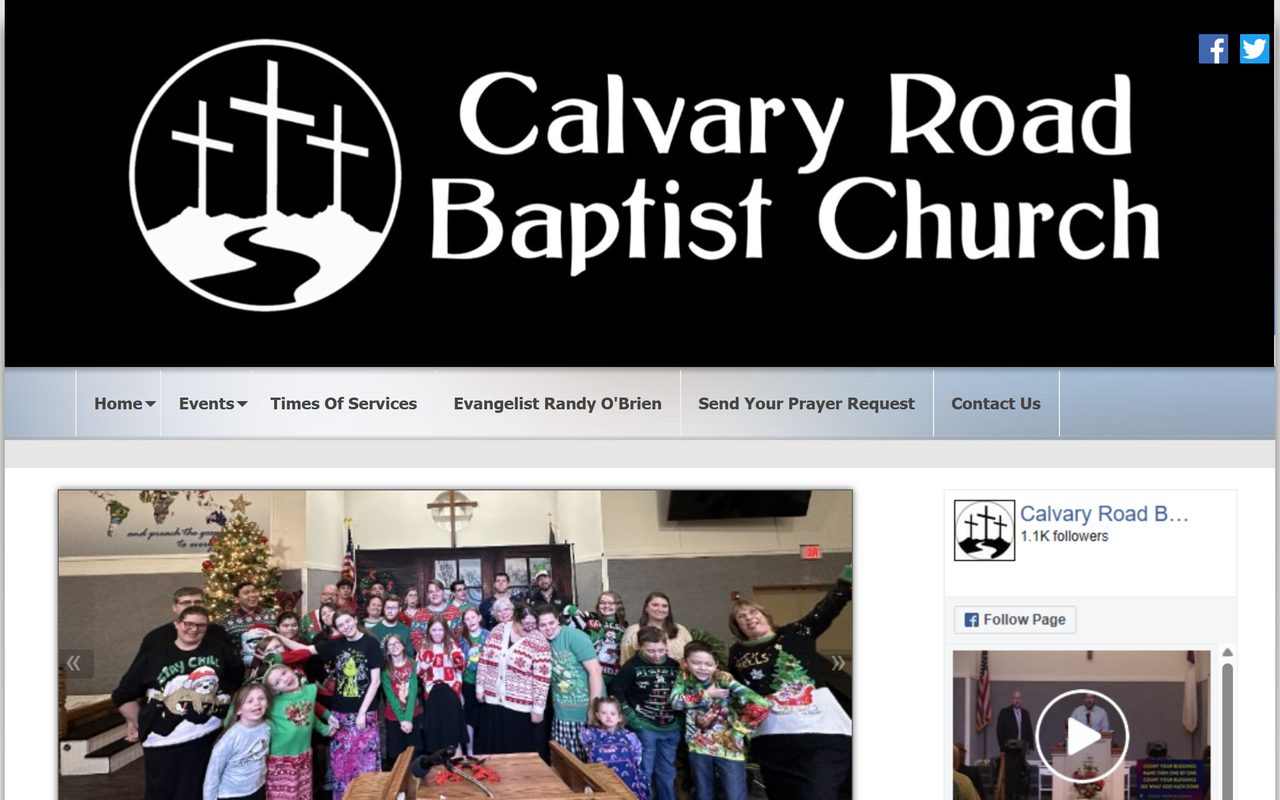
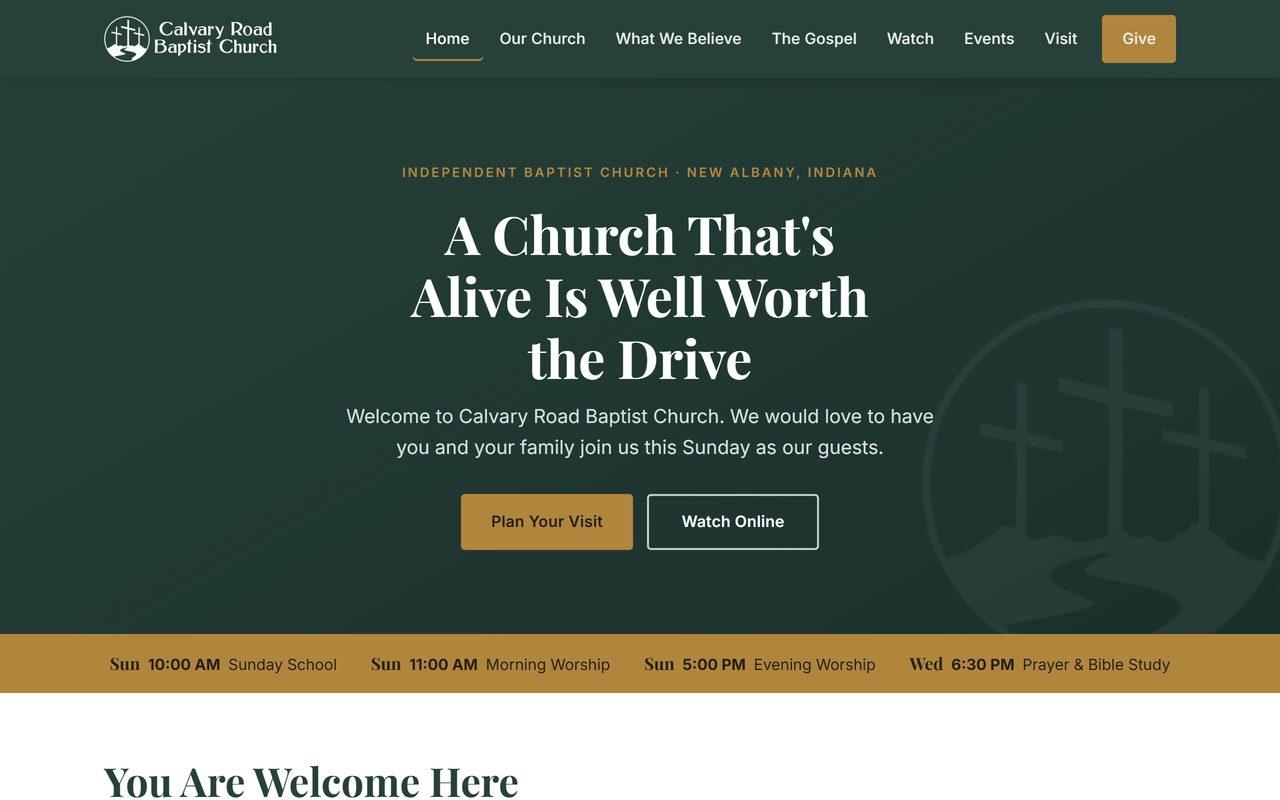
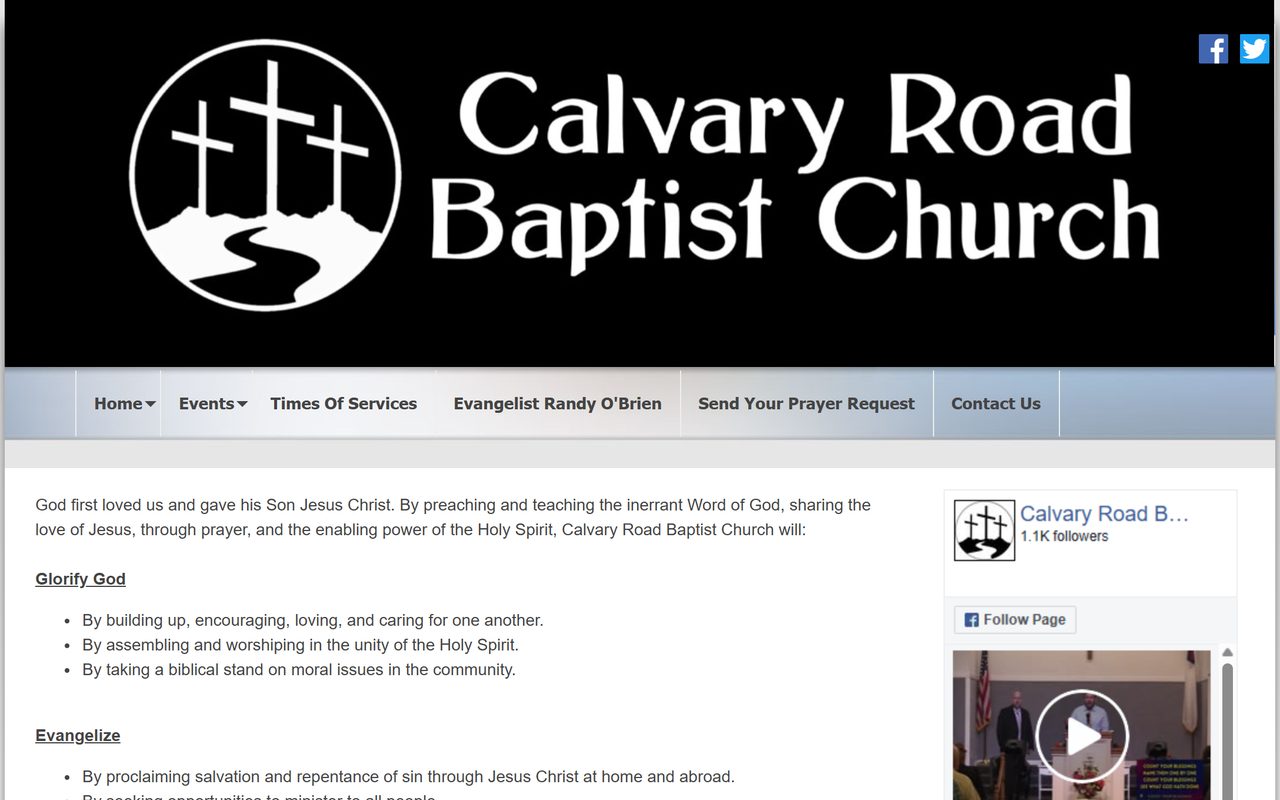
The homepage.
Same church, same message. One of them tells a first-time visitor what they need to know.
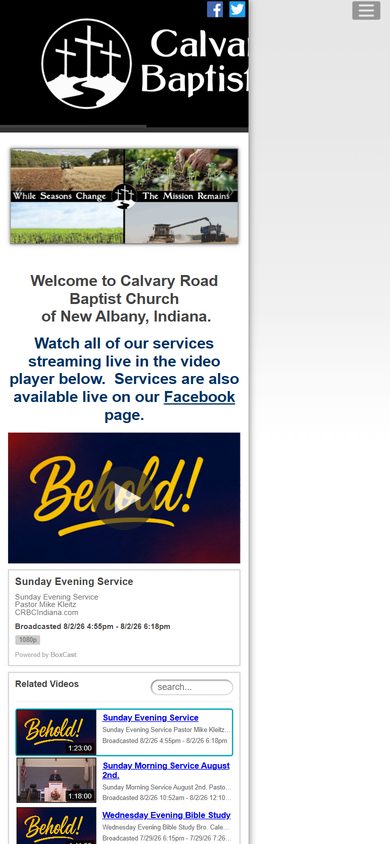
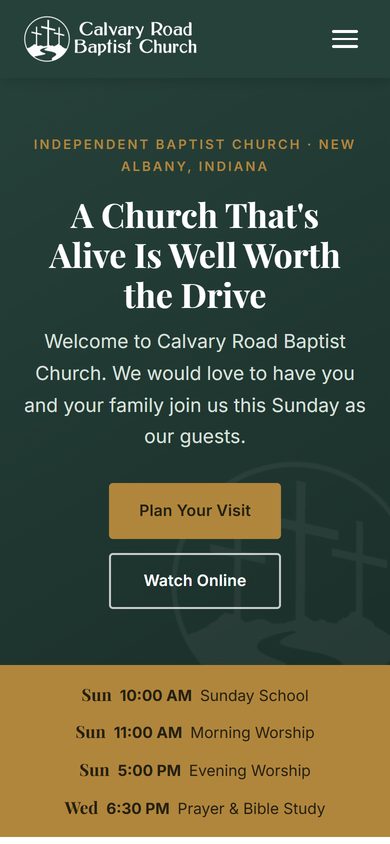
The same homepage, on a phone.
This is the one that mattered most. Around half of the people looking for a church are doing it on a phone, and the old site gave them nothing to tap.
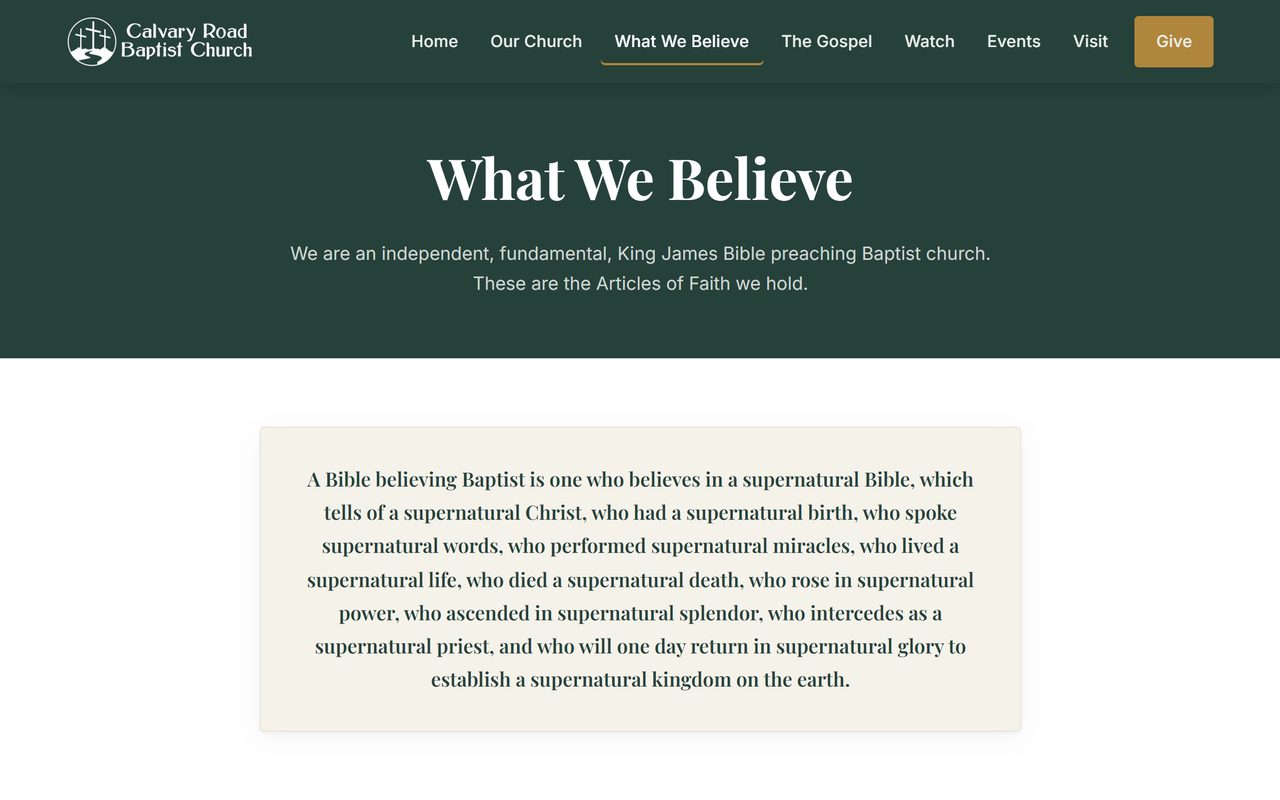
What We Believe.
Nineteen articles of faith. Reproduced word for word, then made possible to actually read.
Eight things worth fixing.
The platform was built on table layouts and a 2011 version of jQuery, which left no way to fix any of this. Some problems were visible. The ones costing them most were not.
- No navigation on a phone. The menu was hidden below 940px with nothing replacing it.
- The homepage wasn't a stable address. A temporary redirect sent the root URL into a chain of ASP pages, so Google indexed a secondary URL.
- One page title for the whole site. Every page announced itself identically to search results.
- Nothing machine-readable. No structured data, no social preview tags, no canonical tags, no sitemap.
- Conflicting contact details. Two different phone numbers and two different email addresses across the site.
- Wrong service times published elsewhere. Six directories listed Sunday evening an hour off, one untouched for over six years.
- A whole year of events invisible. The activities calendar was a single flat image.
- Duplicated analytics and a boxed-in logo. Two tracking scripts loading at once, and a logo saved as a black-background JPEG.
Before and after, side by side.
Every figure below was measured directly from the two live sites, not estimated.
| Measure | Before | After |
|---|---|---|
| Homepage HTML weight | 63,197 bytes | 19,863 bytes (68% smaller) |
| Page titles | Identical on every page | Unique and descriptive per page |
| Structured data | None | Church, FAQ, 78 events, staff, video |
| Social preview tags | None | Full Open Graph and Twitter cards |
| Mobile navigation | None | Working menu on every page |
| Layout method | Nested layout tables | Semantic HTML5 |
| JavaScript | jQuery 1.7.1, released 2011 | 3 KB of plain JavaScript |
| Sitemap & canonicals | Neither | Both, submitted to Google |
| Who owns it | Vendor platform | The church |
Moving twenty years without losing anything.
A rebuild is the easy half. The half that goes wrong is the move.
- Every old address still works. Ten indexed URLs were mapped to their new pages, so two decades of search history carried across.
- Email never went down. Both domains carried live church mailboxes. The website records were repointed and the mail records left untouched.
- A hidden redirect was found and removed. The new domain still had an old forwarding rule quietly sending a share of visitors back to the previous site.
- The church owns the keys. Domain, hosting, and the code all sit in accounts belonging to the church, with me added to maintain them.
Is your site working against you?
If it looks fine on your laptop and falls apart on a phone, that is worth twenty minutes of conversation.
Schedule a consultation →