Church websites that help a visitor decide to come on Sunday.
Most people look a church up on their phone before they ever walk in. Your site should answer their first questions on the first screen and make the next step easy.
What a church site needs to do well.
Every church is different, but the people looking you up tend to ask the same few things. These are the pieces I build around.
Service times and directions first
Times, address, tap-to-call, and tap-for-directions sit in the first screen on a phone, where most visitors start.
A page for planning a first visit
Where to park, when to arrive, and what to expect, written for the people too polite to call and ask.
Sermons and live streams
A video library people can browse, and a page that can switch to the live stream on its own while the service is on.
Your beliefs and the gospel in your own words
Your statement of faith and a clear gospel presentation, published exactly as written, with Scripture references that can open right on the page.
Ministries and events
Room for each ministry to have its own page, and an events calendar that search engines can list on their own.
The tools you already use
Links into the giving and church management services your church already relies on, so nothing has to change behind the scenes.
Two church sites, built and launched.
Both are real congregations with sites you can visit right now, and each has a full case study with the before and after.
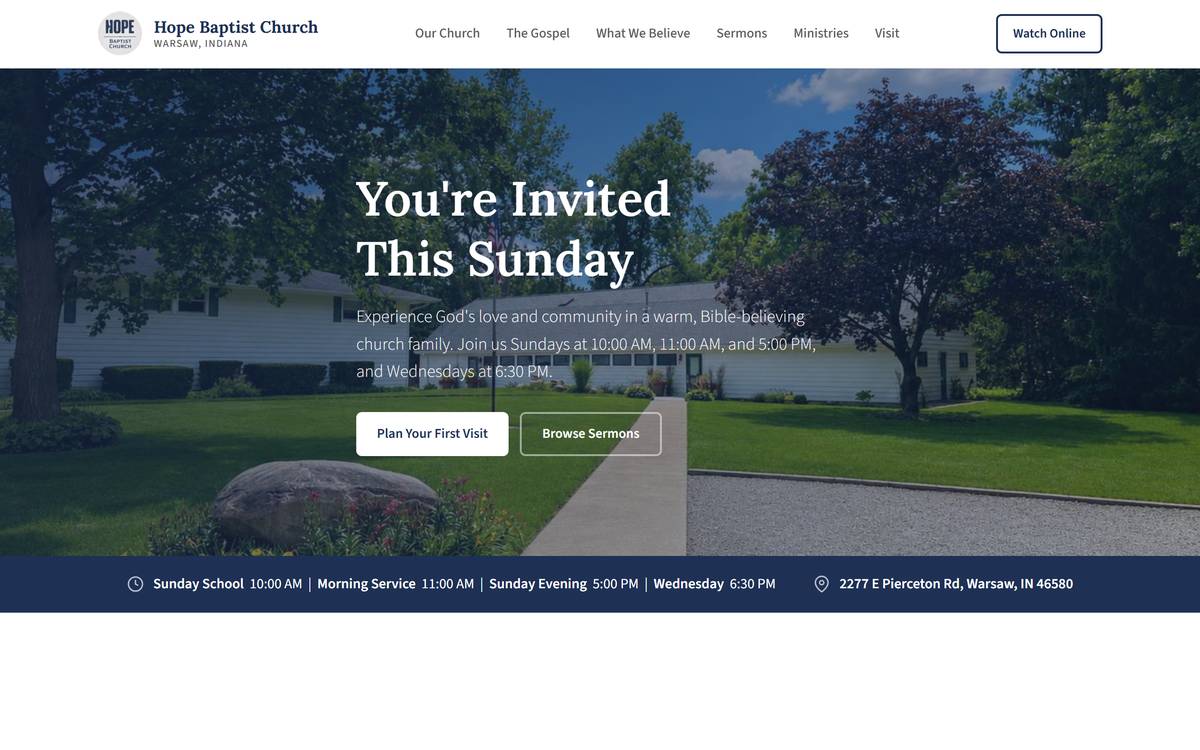
Hope Baptist Church
From one unchanged page to eight, with sermons, a live stream that switches on during service, and a page for first-time visitors.
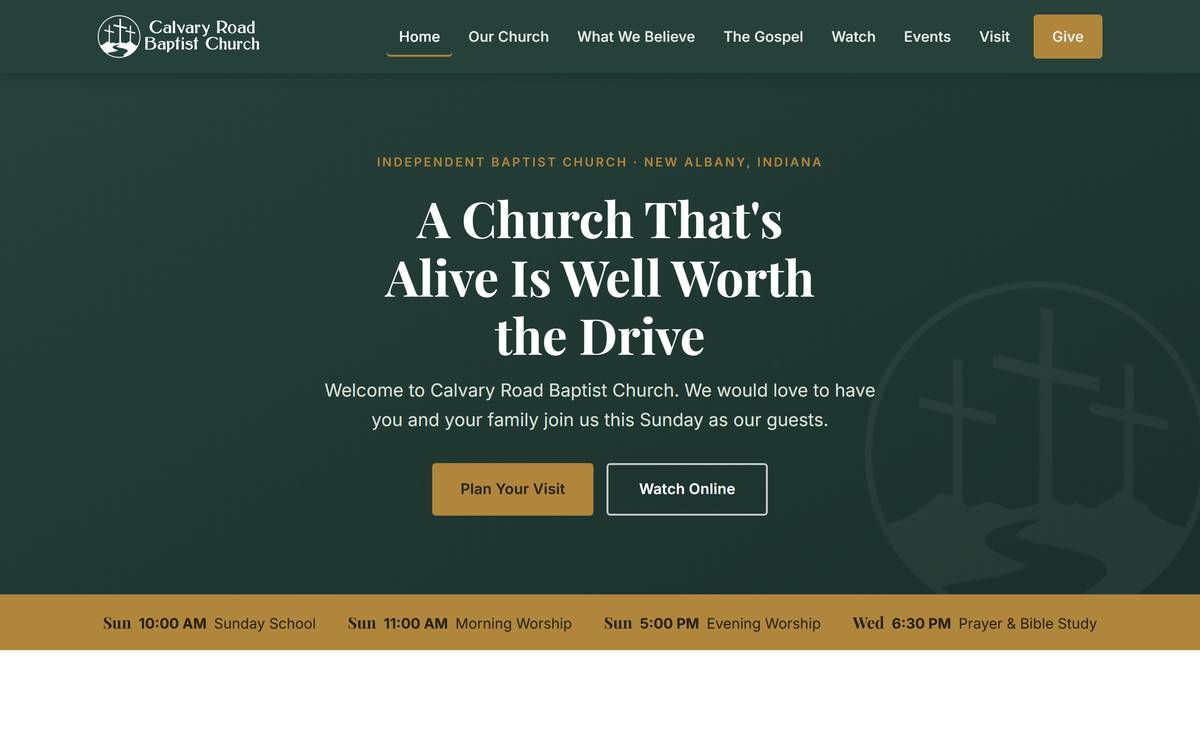
Calvary Road Baptist Church
Moved off a platform the church had used since 2006, with every old address redirected and the domain and hosting now in the church’s own name.
The parts that are easy to get wrong.
Leaving an old platform safely
A church that has been on the same platform for years has addresses Google already knows and email that cannot go down. Each old address gets mapped to its new page, the email records stay untouched, and the domain and hosting can move into accounts the church controls.
Found by people searching nearby
Each site describes your church to search engines in their own format, which lets Google and AI assistants give the right service times and location when someone asks, and your Google Business Profile can be set up to match the site.
Pricing and care
Church sites use the same published build pricing as every project. If you would like the site looked after once it is live, hosting and care are priced to your church once we talk.
What churches usually ask first.
What should a church website include?
Service times, your address with directions, what to expect on a first visit, sermons or a live stream, what you believe, your ministries, and a simple way to contact the church. Those answer the questions a visitor has before deciding to come.
How much does a church website cost?
A church site is priced on the same published ladder as any other build, from $800 for a single page to about $1,600 for a site of up to six pages, with larger sites from around $2,400. The exact figure is agreed in writing before any work begins, and hosting and care afterward are priced for your church separately.
Can you move our site off the platform we use now?
Yes. Old addresses are redirected to their new pages so your search history carries across, the records your email depends on are left alone, and the domain and hosting can sit in accounts the church owns.
Is your church’s website helping visitors find you?
Send me your current address, or tell me you are starting from nothing. I will reply with what I would change first and what it would cost.
Tell me about your church’s site →Or call or text me at (502) 509-3105